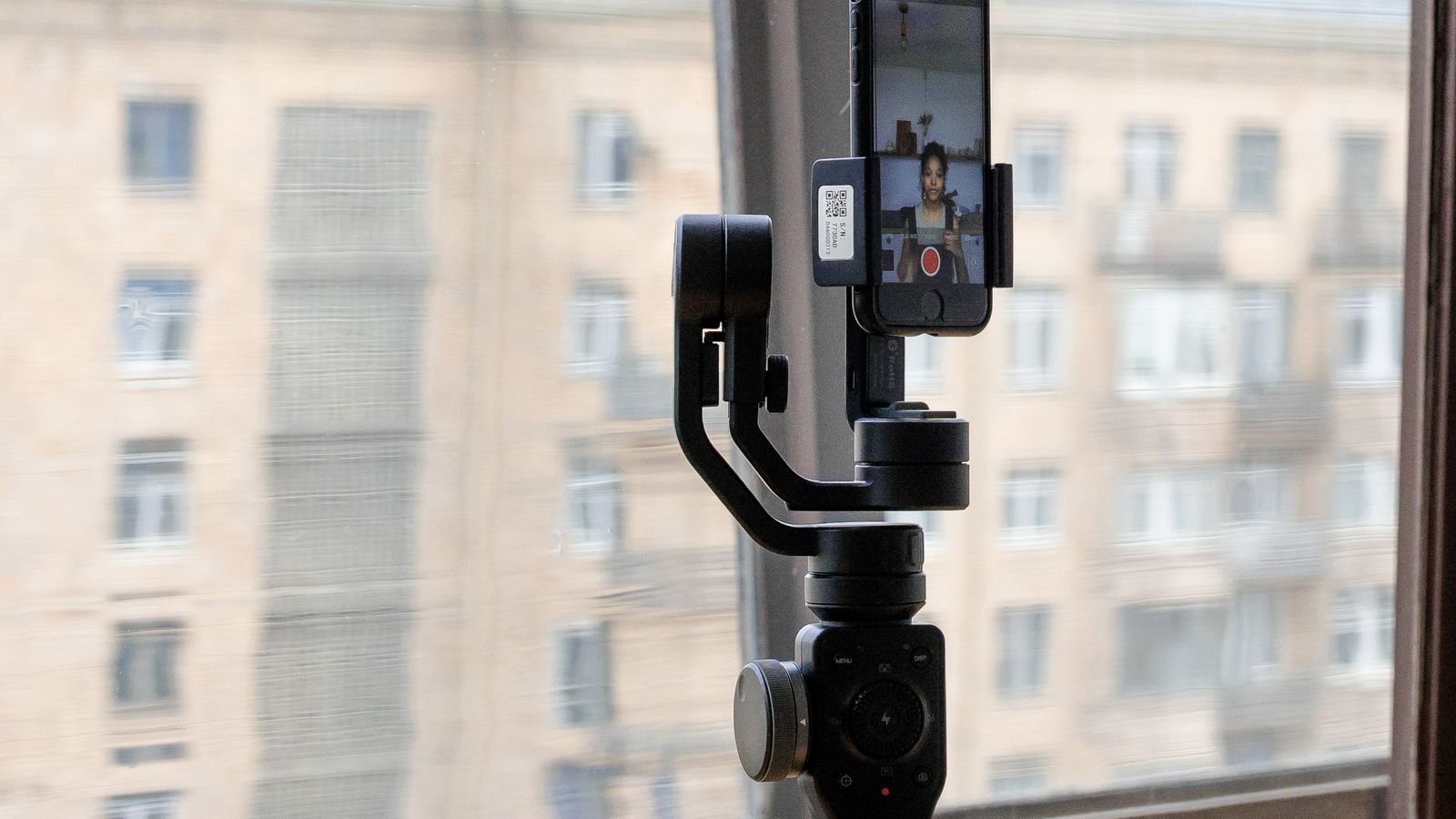
Your paralegal films a clever Reel about what to do after a fender bender and sets it to the song everyone is using this week. Two days later the audio is muted, or the post is gone, or there is a copyright notice on the firm’s account. Law firm Reels music copyright problems are common because the apps make trending songs one tap away, even for accounts that have no right to use them.
For most businesses that is an annoyance. For a law firm it is worse. A prospect who sees a muted video from a lawyer wonders how carefully that firm handles her case. The answer is not to give up on short video. It is to know which audio your firm can use, and to check it before anything posts.
Why the rules are different for your firm’s account
Personal accounts and business accounts do not get the same music. Instagram’s own help pages say the music in its library is meant for personal, non-commercial use, and that some business accounts and some post types do not have access to the library at all. Instead, they point business accounts to Meta’s Sound Collection, which they say can be used for commercial purposes such as advertising.
Your firm’s account exists to bring in clients. Every post is marketing, even the funny ones. So a song your associate can use on her personal account may not be one the firm can use on its account, and the fact that the app showed it to you is not permission.
The same thinking applies on YouTube Shorts and TikTok. Each platform has its own music terms for commercial accounts. Read them for the platforms you use, and assume a popular commercial track is not cleared for a business until you see that it is.
What fair use does and does not cover
Someone on your team will say “it is only a few seconds, that is fair use.” That is not how the law works. The U.S. Copyright Office’s fair use index and explainer walks through the four factors in 17 U.S.C. 107 that courts weigh:
- The purpose and character of the use, including whether it is commercial or for nonprofit educational purposes.
- The nature of the copyrighted work.
- The amount and substantiality of the portion used compared with the whole work.
- The effect of the use on the potential market for, or value of, the work.
The Copyright Office says courts evaluate fair use claims case by case. There is no safe number of seconds. It also says commercial use is not automatically unfair, but courts balance the purpose and character of the use against the other factors.
Now run a typical law firm Reel through those factors. The purpose is promoting a business. The work is a creative song, the kind of work copyright protects most strongly. The clip is often the most recognizable part, the hook. And licensing songs for ads is a real market that an unlicensed use sidesteps. None of that adds up to a comfortable fair use argument. Fair use is a defense you raise after someone objects, not a plan for your content calendar.
What happens when a firm gets it wrong
The consequences range from mild to awkward. A platform can mute the audio, block the video in some places, take the post down, or record a claim against the account. A rights holder can also contact the firm directly.
The cost that matters most is not the post. It is what the post says about you. A law firm that ignores someone else’s rights in its own marketing hands a skeptical prospect an easy reason to call the next firm. If your firm handles business law or intellectual property matters, the problem is sharper still.
Responsibility does not shift because someone else made the video. If an outside vendor, a summer intern or a staff member with the account password picked the song, the post still went out under the firm’s name. Decide who is allowed to publish to each account, and make sure each of those people knows the firm’s audio rules before they post. A shared password with no written rules is how most of these problems start, because the person posting is thinking about the trend, not about the license behind it.
There is also the cleanup. Old posts using commercial tracks do not stay safe because nobody has flagged them yet. When you audit, look back through the firm’s feed, not just next week’s queue.
Which audio your firm can safely use
You have more choices than you might think, and most of them sound fine in a short video.
- Business libraries on each platform. Meta’s Sound Collection is built for this purpose, according to Instagram’s help pages. YouTube Studio has an Audio Library as well. Check the license terms shown for each track, since some ask for attribution.
- Licensed stock music. Paid music libraries sell licenses that cover commercial social posts. Keep the license record with the video file.
- Original sound. The attorney’s own voice, recorded clearly, is the strongest audio a law firm has. Most legal content works better with no music under it at all.
- Commissioned music. A short custom sting for the start and end of your videos becomes part of your brand, and the firm owns the rights it negotiated.
Original sound deserves special attention. Trends come and go in days. An attorney explaining, plainly, what happens at a Nevada DMV hearing after a DUI arrest is useful for months. Our guide to attorney video and YouTube SEO covers how that kind of plain, voice-led video gets found in search long after a song has faded.
What about trending sounds without a song
Many trends are not songs. They are audio clips of someone talking, a movie line, or a sound effect. Treat them the same way. A clip from a film or a show has a copyright owner. A clip of a creator talking belongs to that creator. Using either on a business account raises the same questions as a song.
The safer move is to borrow the format, not the audio. If a trend is a question followed by a reaction, your attorney can do the question and reaction in her own voice. That keeps the familiar shape that makes people stop scrolling, without the rights problem.
Skits raise one more rule. Nevada’s Rule 7.2(b)(1) says that if an ad uses actors to portray a lawyer, members of the firm or clients, or depicts fictionalized events or scenes, that must be disclosed, specifically enough to show which people are actors, for as long as they appear. A staff member playing a client in a Reel is an actor. Add the on-screen disclosure.
Adding an audio check to your approval list
Proof by process is the only thing that holds when a busy team is posting several times a week. We add an audio step to every firm’s post approval list, so nobody has to remember it.
- Name the source of every sound in the post: original, platform business library, licensed library or commissioned.
- For library or licensed tracks, attach the license or the track page, and note any attribution required.
- For original sound, confirm nothing in the background is copyrighted, such as music playing in the office or a TV on in the lobby.
- Check the format against your state’s advertising rules, including disclosures for actors or dramatizations.
- Get attorney sign-off on the finished video, with sound on.
The background check catches more problems than people expect. A great clip filmed in a reception area with the radio on is still a clip with someone else’s song in it.
Audio is part of the same trust picture as your visuals
Firms that care about using their own photos already understand the idea. Stock images that appear on many other sites quietly tell visitors you did not bother. Our piece on original photography as a trust signal on law firm websites makes that case for images, and the same reasoning applies to sound. Your own voice and your own office, recorded well, say more than the song of the week.
It also makes your videos easier to repurpose. A Reel with licensed or original audio can move to your website, your YouTube channel and your paid ads. A Reel built on a trending track usually cannot leave the app where you found the song.
How short video should earn its place
Reels and Shorts are worth doing only if they lead to calls that turn into signed cases. Views from people outside your area, or outside your practice, do nothing for your intake team. Measure the videos the way you measure everything else: which ones led someone to the contact page, and which of those inquiries signed.
Judge trend-chasing videos on that measure, not on likes. A video with modest views that brings in one real inquiry is doing more for the firm than a viral clip that brings in none.
Short video is one part of a wider plan. Our law firm social media service builds the content calendar, the approval list and the tracking together, so every post is cleared and every inquiry is counted.
If your firm already has a feed full of trending audio, or you want a short video plan that will not create a copyright headache, book a free 30-minute strategy call and we will look at what you are posting now and what to change first.